

You’re likely familiar with the Right to Information Act, commonly known as RTI—a potent tool for the public post-independence. The RTI Act of 2005 stands as a revolutionary law, aimed at fostering transparency within India’s governmental organizations. Before this act, only Members of Parliament held the exclusive right to access government information. With its implementation, the common person gained the ability to seek information from the government, making the RTI Act a valuable tool for anyone, be it a business owner or a concerned citizen. Understanding the Basics of RTI The RTI Act, with its extensive scope, covers a myriad of governance-related issues across all tiers of government—central, state, and local. It also extends to entities receiving substantial government funding. This guide aims to demystify the process of filing an RTI application, ensuring you can harness the power of information for your specific needs. How to File an RTI Application 1. Identify the Public Authority: – Determine the department or office from which you want information. 2. Draft Your Application: – Draft the RTI application form in English, Hindi, or the official language of the state. – Address it to the Public Information Officer (PIO), articulating your inquiries clearly. – Include your complete name, contact information, and the preferred address for receiving the RTI information/response. 3. No Prescribed Format: – There is no prescribed format for the application, and it can be submitted on plain paper. – No need to provide reasons for seeking information. Steps for RTI Application Online The Department of Personnel and Training has introduced the RTI online web portal, www.rtionline.gov.in, offering a convenient means for Indian citizens to submit their RTI applications and appeals electronically. The prescribed RTI fee can be conveniently paid online through this portal, streamlining the entire process. Fee and Modes of Payment Citizens seeking information are required to submit a demand draft, banker’s check, or Indian Postal Order of Rs. 10/- along with the application. Payment can also be made in cash directly to the Public Authority or Assistant Public Information Officer, with a proper receipt issued. For Central Ministries/Departments, online payment options are available through State Bank of India Internet Banking or via Master/Visa Debit/Credit Card. Note: Citizens below the poverty line are exempt from paying the RTI fee, provided they enclose a copy of the relevant government-issued certificate as proof. Period for Information Supply The public authority aims to furnish the requested information within 30 days of receiving the application. However, if the information pertains to the life or liberty of an individual, it must be provided within a shorter timeframe of 48 hours. Government Offices Covered Under the RTI Act The RTI Act encompasses all government agencies, whether operating under the state or central government. This includes entities such as Municipal Corporations, PSUs, Government Departments, Ministries, the Judiciary, Government-Owned Companies, Universities, Schools, Construction Departments, Road Authorities, Provident Fund Department, and more. Government Organizations Not Covered Under the RTI Act Entities associated with defense and intelligence, such as RAW, BSF, CRPF, CISF, Intelligence Bureau, National Security Guard, etc., are subject to the provisions of the RTI Act, with specific exemptions to protect sensitive information. Summary: Empowering Citizens through Information The Right to Information (RTI) is a highly effective and cost-efficient tool, allowing individuals to scrutinize the allocation of public funds, identify corruption, and assess the working status of government officials. It serves as a means to subject government institutions to scrutiny, contributing to the principles of accountability and openness in governance. Empowered with the knowledge of RTI, an ordinary citizen has the authority to request information from any government agency, thereby enhancing transparency in operations.
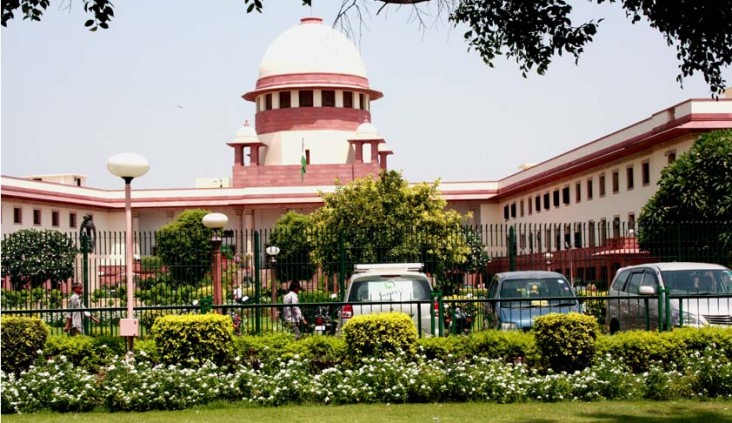
Introduction: The Supreme Court of India, as the highest judicial authority, plays a pivotal role in upholding justice and ensuring legal remedies for citizens. Special Leave Petitions (SLPs) are a crucial component of this process, serving as a gateway to access justice at the highest level. In this comprehensive guide, we will delve into the various stages, status, and lifecycle of an SLP in the Supreme Court, shedding light on how and when an SLP can transform into a Civil Appeal or Criminal Appeal after leave is granted. Understanding Special Leave Petitions (SLPs): SLPs are extraordinary remedies provided under Article 136 of the Indian Constitution. They grant the Supreme Court discretionary powers to hear and decide cases of special significance. Typically, SLPs are filed to challenge decisions of High Courts or Tribunals that raise questions of law or principles of immense public importance. Stages in the Lifecycle of an SLP: 1. Filing of the SLP: – The process commences when the petitioner files the SLP in the Supreme Court. – The SLP is scrutinized for procedural and jurisdictional compliance. 2. Hearing and Admission: – Once filed, the SLP is listed before a bench of the Supreme Court. – The court may either admit or dismiss the SLP after preliminary consideration. 3. Notice to Opposite Party: – If the SLP is admitted, a notice is issued to the opposite party, informing them of the petition and seeking their response. 4. Submission of Counter-Affidavit: – The opposite party submits a counter-affidavit, presenting their version of the case. 5. Arguments and Hearing: – The matter is then heard by the court, with both parties presenting their arguments. – The court may pass an interim order or directions if necessary. 6. Leave Granted or Denied: – After hearing, the court may grant or deny ‘leave,’ which is permission to proceed with the appeal. – If leave is granted, the SLP progresses to the next stage. 7. Conversion into Civil or Criminal Appeal: – If the SLP is converted into a Civil or Criminal Appeal, it proceeds to be heard on merits. – The court may issue final judgments, set aside or uphold the impugned decision. Conversion into Civil or Criminal Appeal: – If the court grants leave in the SLP, it is converted into a Civil or Criminal Appeal. – The conversion depends on the nature of the case and the underlying issues involved. – The appeal is heard on its merits, and the Supreme Court issues a final judgment, upholding or setting aside the decision in question. Status and Lifecycle of the Case: – The status of an SLP can vary from ‘admission’ to ‘dismissal’ at different stages. – If dismissed, the case concludes at the SLP stage. – If admitted, the case progresses to the ‘Civil Appeal’ or ‘Criminal Appeal’ stage. Conclusion: Special Leave Petitions in the Supreme Court of India serve as a vital legal recourse, allowing individuals to seek justice and address matters of exceptional significance. Understanding the stages, status, and lifecycle of an SLP is crucial for those navigating the complex legal landscape. As cases progress from the SLP stage to Civil or Criminal Appeals, the Supreme Court plays a critical role in interpreting the law, upholding justice, and setting legal precedents that influence the course of Indian jurisprudence. Ready to discuss your legal concerns and explore your options? Book your FREE legal consultation with us today. We’re here to provide expert guidance and answer your questions. Don’t wait; take the first step toward resolution. Click the link to schedule your appointment now. #LegalConsultation #ExpertAdvice #LegalSupport Navigating the Special Leave Petition (SLP) Process in the Supreme Court of India: A Time-Bound Journey Introduction: The legal journey in India is an intricate process, and this complexity becomes evident in the Supreme Court. Special Leave Petitions (SLPs) are a critical component of this journey, often representing the final avenue for individuals seeking justice at the highest level. In this comprehensive guide, we’ll explore the various stages, timeframes, and the entire lifecycle of an SLP in the Supreme Court, including crucial milestones like the “notice before admission” stage. Understanding Special Leave Petitions (SLPs): SLPs are a unique legal remedy enshrined in Article 136 of the Indian Constitution. They grant discretionary powers to the Supreme Court to hear and decide on cases of exceptional significance. Typically, SLPs are filed to challenge decisions of High Courts or Tribunals that raise fundamental questions of law or principles of immense public importance. A Time-Bound Journey: 1. Filing the SLP (0-1 month): – The SLP process commences with the petitioner filing the SLP in the Supreme Court. – This stage usually takes one month from the date of filing. 2. Hearing and Admission (1-2 months): – Once filed, the SLP is listed before a bench of the Supreme Court. – The court conducts a preliminary review, and within one to two months, the SLP may either be admitted or dismissed. 3. Notice to Opposite Party (2-3 months): – If the SLP is admitted, a notice is issued to the opposite party, informing them of the petition. – This stage typically takes one to two months from admission. 4. Submission of Counter-Affidavit (3-5 months): – The opposite party presents a counter-affidavit, outlining their perspective on the case. – Preparing and submitting the counter-affidavit usually takes two to three months. 5. Arguments and Hearing (5-8 months): – The court proceeds to hear the matter, with both parties presenting their arguments. – This stage varies, but on average, it can take three to four months for a full hearing. 6. Leave Granted or Denied (8-9 months): – After hearing the arguments, the court may grant or deny ‘leave’ to proceed with the appeal. – This stage usually takes one month to conclude. 7. Conversion into Civil or Criminal Appeal (9-10 months): – Depending on the nature of the case and the issues involved, the SLP is converted into either a Civil Appeal or a Criminal Appeal. – The appeal is then heard on its merits, typically taking one to two months for judgment. Understanding “Notice