

Introduction On May 2025, the Supreme Court of India took a significant step toward addressing inconsistencies in compensation awarded to victims of hit-and-run accidents across India. In a landmark directive, the Apex Court called for uniformity in the compensation framework under the Motor Vehicles Act, signaling a shift toward a more equitable and transparent legal standard. This article explores the legal framework, current issues, Supreme Court’s intervention, and the remedies available for victims and their families. 1. Legal Framework Governing Hit-and-Run Cases in India 1.1 Definition of Hit-and-Run As per Section 161(1) of the Motor Vehicles Act, 1988 (amended in 2019): “Hit and run motor accident” means an accident arising out of the use of a motor vehicle the identity whereof cannot be ascertained despite reasonable efforts for the purpose.” This definition clearly identifies cases where the offending vehicle flees the scene and cannot be traced. 1.2 Section 161: Compensation Scheme for Hit-and-Run Victims Bare Act Provision: Section 161(3): “Subject to the provisions of this Act, there shall be paid compensation of a sum of ₹2,00,000 in the case of death and ₹50,000 in the case of grievous hurt to the victim or the legal representatives of the victim of a hit and run motor accident.” Explanation: 2. Supreme Court’s Concern: Injustice Through Inconsistency In the recent matter [In Re: Uniform Compensation for Hit-and-Run Cases, 2025], the Supreme Court bench led by CJI D.Y. Chandrachud observed that: “There exists an unjustifiable disparity in compensation awarded across states and tribunals, leading to unequal treatment of victims based on geography rather than legal rights.” The Court called for: 3. Issues with the Current Compensation Model 3.1 Insufficient Compensation 3.2 Delays in Compensation 3.3 Lack of Awareness 4. Related Case Laws & Judicial Observations 4.1 Sarla Verma v. DTC (2009) 6 SCC 121 Though not a hit-and-run case, the Court laid down a structured formula for calculating just compensation under Section 166, which is often cited in accident-related matters. 4.2 K. Suresh v. New India Assurance Co. Ltd. (2012) 12 SCC 274 SC held that tribunals should ensure compensation is just and reasonable, suggesting that nominal amounts may fail the test of Article 21 protection. 4.3 SC Suo Moto Writ (2025) The Court noted that “Right to life includes the right to dignified compensation in case of wrongful loss of life.” 5. Remedies for Victims and Families 5.1 Claim Compensation under Section 161 5.2 File Under Section 166 (if Offender is Known) Victims may also seek additional or full compensation under: Section 166, MV Act: “Application for compensation in respect of accidents involving death or bodily injury.” This allows: 5.3 Filing a Writ for Delay or Denial 6. Proposed Reforms & Government Role 7. How ProLegalMinds Helps Victims At ProLegalMinds, we assist families with: Conclusion The Supreme Court’s proactive step in demanding uniformity in compensation for hit-and-run victims is a constitutional milestone that upholds Article 14 (Right to Equality) and Article 21 (Right to Life). For families suffering from such tragic incidents, understanding the legal remedies and structured support available under Indian law can make a huge difference in getting timely justice and financial relief. 🔍 Need Legal Help on Motor Accident Cases? 📞 Call: +91-9494051717 📱 WhatsApp: +91-9494051717 🌐 Visit: prolegalminds.com 📅 Book Meeting: Click to Schedule 🔗 LinkedIn: ProLegalMinds

🏛️ Introduction The Indian digital ecosystem is growing at an unprecedented pace. However, with increased content generation comes greater legal scrutiny, especially regarding obscenity, indecent representation, and child protection laws. Recently, the Supreme Court of India restrained a popular podcaster’s digital shows over alleged obscenity charges. This incident has once again brought attention to the stringent legal framework governing online content in India. In this blog, we explore: 1. Understanding “Obscenity” in Indian Law 1.1. Meaning of Obscenity The term ‘obscenity’ is not precisely defined but is understood in judicial interpretation. In Aveek Sarkar v. State of West Bengal (2014) 4 SCC 257, the Supreme Court clarified: “Obscenity must be judged from the point of view of an average person, applying contemporary community standards.” Thus, whether content is obscene depends on: 2. Applicable Laws on Digital Obscenity (Post-2024) 2.1. Bharatiya Nyaya Sanhita, 2023 (BNS) (Replacing IPC from 1st July 2024) Bare Act Provision: Section 292 BNS: “Sale, hire, distribution, public exhibition, circulation, import, export, or advertisement of obscene books, pamphlets, papers, drawings, paintings, representations, figures, or any other obscene object shall be punishable.” Explanation: “Obscenity” includes anything which: In-depth Explanation: Punishments: Offense Punishment First Conviction Up to 2 years imprisonment and/or fine. Subsequent Conviction Up to 5 years imprisonment and fine. Example: 2.2. Information Technology Act, 2000 (Amended 2024) Bare Act Provision: Section 67 IT Act: “Whoever publishes or transmits or causes to be published or transmitted in the electronic form, any material which is lascivious or appeals to the prurient interest, or if its effect is such as to tend to deprave and corrupt persons…” In-depth Explanation: Punishments: Offense Punishment First Conviction Up to 3 years imprisonment and fine up to ₹5 lakh. Subsequent Conviction Up to 5 years imprisonment and fine up to ₹10 lakh. Example: 2.3 The Indecent Representation of Women (Prohibition) Act, 1986 Bare Act Provision: Section 3: “No person shall publish, or cause to be published, or arrange or take part in the publication or exhibition or any advertisement which contains indecent representation of women in any form.” Section 4: “No person shall produce, sell, let to hire, distribute, circulate or send by post any book, pamphlet, paper, slide, film, writing, drawing, painting, photograph or representation containing indecent representation of women in any form.” Definition under Section 2(c): “Indecent representation of women” means the depiction in any manner of the figure of a woman, her form or body or any part thereof in such a way as to have the effect of being indecent, or derogatory to, or denigrating women, or is likely to deprave, corrupt or injure public morality.” In-depth Explanation: Penalties: Practical Application in Digital Era: Although the Act did not originally include digital media, by interpretative extension and through combined reading with the Information Technology Act, 2000, online publishers are now also held accountable. Example: Recent Developments: 2.4 The Protection of Children from Sexual Offences Act, 2012 (POCSO Act) Bare Act Provision: Section 11: “Whoever, intending to or knowing it to be likely that he will thereby cause sexual harassment to a child, — (a) utters any word or makes any sound, or makes any gesture or exhibits any object or part of body with the intention that such word, sound, gesture or object or part of body shall be heard or seen by the child; (b) makes a child exhibit his body or any part of his body so as it is seen by such person or any other person; © shows any object to a child in any form or media for pornographic purposes; or (d) repeatedly or constantly follows or contacts the child either directly or through electronic, digital or any other means;…” Section 13: “Whoever uses a child in any form of media (including program or advertisement, telecasting, distribution, display) for sexual gratification is said to commit the offence of using a child for pornographic purposes.” In-depth Explanation: Penalties: OffensePunishmentSexual harassment (Section 11)Up to three years imprisonment and fine.Use of child for pornography (Section 13)Rigorous imprisonment from five years to seven years, extendable for aggravated forms. Practical Application: Example: Landmark Cases: 3. Landmark Cases and Precedents 3.1. Aveek Sarkar v. State of West Bengal (2014) 3.2. Shreya Singhal v. Union of India (2015) 3.3. Recent 2024 SC Directive 4. Remedies If Someone is Charged If a person faces an obscenity charge, immediate legal steps include: 4.1. Engaging Legal Counsel 4.2. Filing for Anticipatory Bail 4.3. Challenging FIR/Proceedings 4.4. Compliance Corrections 5. How Content Creators Can Avoid Obscenity Charges 🔥 Conclusion With the evolving digital landscape, the boundaries of free expression and legal responsibility are tightening. Content creators, publishers, and even viewers must tread carefully, understanding the fine balance between creativity and compliance. Laws like BNS 2023, IT Act 2000, POCSO 2012, and Indecent Representation Act now actively regulate the Indian digital space. 💬 If you are facing or anticipating any legal issue regarding online content, consult expert legal advisors immediately to safeguard your rights and interests. ✍️ Authored By: ProLegalMinds — Legal Solutions for the Digital Era 🌐 Website: prolegalminds.com 📞 Call: +91 94940 51717 📱 WhatsApp: +91 94940 51717 🔗 LinkedIn: ProLegalMinds LinkedIn

As the gavel falls on judgment day in a criminal trial, the accused find themselves at a pivotal moment. A nuanced understanding of the legal remedies available becomes paramount in navigating the complexities of India’s criminal justice system. – Plea Bargaining (Section 265-A, CrPC): Section 265-A allows accused individuals to opt for plea bargaining, admitting guilt in exchange for a lighter sentence. – Probation of Offenders Act (Section 4): First-time offenders can seek release on probation under the Probation of Offenders Act, Section 4. – Writ Petitions (Article 226, 32, Constitution of India): Accused can approach the High Court (Article 226) or Supreme Court (Article 32) through writ petitions like habeas corpus, mandamus, or certiorari if there is a violation of fundamental rights. – Application for Suspension of Sentence (Section 389, CrPC): Section 389 allows the accused to seek the suspension of the sentence pending appeal, enabling them to remain out of custody during the appeal process. – Fresh Trial: In extraordinary circumstances, a fresh trial may be sought based on grounds like the discovery of new evidence. Client-Centric Approach: Conclusion: Judgment day need not be the final chapter for the accused. Armed with a comprehensive understanding of legal provisions, avenues like bail, appeals, and constitutional remedies offer a lifeline. Navigating this legal terrain demands strategic thinking and legal acumen. As the wheels of justice turn, the accused can find solace in the fact that the journey doesn’t end with the pronouncement of judgment. #CriminalJustice #LegalRemedies #IndianLaw

In an era dominated by digital communication, safeguarding data privacy has become an imperative. This blog aims to provide a comprehensive exploration of data privacy laws in India, particularly focusing on the complexities surrounding call recordings. Delving into both legal nuances and practical implications, we’ll uncover the legal provisions, potential offences, and the associated penalties, while also shedding light on how individuals can be prosecuted and the safeguards available. Protection under the Act: The Act provides penalties for the breach of privacy and confidentiality. Initially, until 2008, this remedy was confined to individuals authorized under the Act who accessed electronic records without consent and disclosed such material. This limited scope did not address the protection of data in private transactions. Data Privacy Laws in India: 1. The Information Technology Act, 2000: It’s noteworthy that the penalty for unauthorized disclosure by private entities under Section 72A is greater than the penalty for similar actions by lawful authorities under Section 72. This legal framework aims to balance data protection while holding both private and authorized entities accountable for privacy breaches. 2. Indian Telegraph Act, 1885: – Section 5(2): Grants the government the power to intercept or disclose messages. 3. Right to Privacy: – Article 21 of the Constitution: Affirms the right to privacy as a fundamental right. Offences Related to Call Recordings: 1. Section 72A of the IT Act: – Offence: Unauthorized access to electronic records, books, correspondence, or other materials without the owner’s consent. – Prosecution: Offenders may face imprisonment up to three years, a fine up to five lakh rupees, or both. 2. Unauthorized Interception under Indian Telegraph Act: – Offence: Intercepting, disclosing, or using the contents of any telegraph message without the sender’s consent. – Prosecution: Offenders may face imprisonment up to three years, a fine, or both. 3. Breach of Contract under IT Act: – Offence: Disclosure of information in violation of a lawful contract. – Prosecution: Legal remedies may include damages awarded through civil suits for breach of contract. Prosecution and Penalties: 1. Section 72A of the IT Act: – Prosecution: Imprisonment up to three years, a fine up to five lakh rupees, or both. 2. Unauthorized Interception under Indian Telegraph Act: – Prosecution: Imprisonment up to three years, a fine, or both. 3. Breach of Contract under IT Act: – Prosecution: Legal remedies may include damages awarded through civil suits for breach of contract. How to Avoid Prosecution: 1. Obtain Explicit Consent: – Ensure explicit consent from all parties involved before initiating call recordings. 2. Implement Data Encryption: – Employ robust encryption methods to secure stored call recordings, mitigating unauthorized access risks. 3. Contractual Clarity: – Clearly articulate the terms of call recording in contractual agreements, ensuring alignment with legal requirements. Conclusion: As technology advances, understanding the intricate legal landscape of call recordings is imperative to navigate potential pitfalls. Strict adherence to data privacy regulations, coupled with obtaining explicit consent and deploying secure technologies, becomes pivotal. In a world increasingly reliant on digital communication, prioritizing privacy and ethical practices is not just good business sense but a legal necessity. Stay informed, stay compliant, and safeguard the privacy rights of all parties involved in the digital exchange of information. Your success is our priority! 🚀 Ready to fortify your corporate journey? Contact us today. 🤝 Addressing such a situation requires a multi-faceted legal approach, combining criminal and corporate law remedies. Engaging legal experts is paramount to navigating these complex challenges and ensuring justice and restitution.

Introduction: Arrests, as potent tools in law enforcement, demand a delicate balance between justice and the protection of individual rights. Human Rights Commissions play a pivotal role in establishing guidelines that align with the legal framework, ensuring the dignity and rights of individuals are upheld during arrest procedures. In this comprehensive exploration, we’ll delve into the essential guidelines provided by Human Rights Commissions, closely intertwined with the relevant sections of the Indian Penal Code (IPC), Criminal Procedure Code (CrPC), and the Indian Evidence Act. 1. Presumption of Innocence: Human Rights Commissions, in consonance with Section 114 of the Indian Evidence Act, underscore the presumption of innocence until proven guilty. Arrests should be viewed as procedural steps rather than a declaration of guilt. 2. Legal Grounds for Arrest: As mandated by Section 41 of the CrPC, authorities must have clear legal grounds for making an arrest. Section 41A further emphasizes the need for a clear warrant or proper justification for arrest, preventing arbitrary detentions. 3. Notification of Arrest: Section 50 of the CrPC aligns with Human Rights Commissions’ emphasis on promptly informing the arrested person and their family of the grounds for arrest and the charges filed against them, ensuring transparency. 4. Right to Legal Representation: Enshrined in Article 22 of the Indian Constitution and supported by Section 303 of the CrPC, the right to legal representation is fundamental. Human Rights Commissions stress the importance of legal counsel during arrests to safeguard against coercion. 5. Avoiding Excessive Force: Section 46 of the CrPC explicitly prohibits the use of excessive force during arrests. This aligns with Human Rights Commissions’ stance on the prohibition of torture or cruel, inhuman, or degrading treatment. 6. Medical Examination: Sections 53 and 54 of the CrPC advocate for a mandatory medical examination after arrest. This mirrors the Human Rights Commissions’ recommendation, ensuring proper documentation and the well-being of the arrested individual. 7. Record Keeping: Section 41B of the CrPC mandates accurate and detailed records of the arrest process. This aligns with Human Rights Commissions’ emphasis on maintaining transparency through meticulous documentation. 8. Prompt Judicial Review: Section 167 of the CrPC aligns with Human Rights Commissions’ emphasis on the right to prompt judicial review. This prevents prolonged detention without legal scrutiny and underscores the principle of swift justice. 9. Protection of Vulnerable Groups: Sections 10 and 12 of the Juvenile Justice (Care and Protection of Children) Act, 2015, and Section 41D of the CrPC outline special care for arresting minors. This complements Human Rights Commissions’ stress on sensitivity toward vulnerable groups during arrests. 10. Post-Release Support: While not explicitly outlined in the legal framework, Human Rights Commissions advocate for post-release support as a part of the broader human rights perspective. This includes rehabilitation services, shielding against reprisals, and aligns with the overarching goal of ensuring holistic justice. Conclusion: Human Rights Commissions’ guidelines seamlessly intertwine with the legal fabric of India, encompassing the IPC, CrPC, and Evidence Act. This harmonious integration ensures that the power of arrest is wielded responsibly and legally, adhering to the principles of justice and human rights. As our legal landscape evolves, these guidelines continue to adapt, reflecting a steadfast commitment to upholding individual dignity and rights in the pursuit of justice.
Indian Evidence Act, 1872 And Bharatiya Sakshya Act 2023: Comparative Chart PART A: HIGHLIGHTS OF THE BILL Context: The Bharatiya Sakshya Bill, 2023 (BSB) stands as a monumental shift, replacing the time-honored Indian Evidence Act, 1872 (IEA). With a nod to technological advancements and evolving legal needs, the BSB upholds several established principles while ushering in crucial modifications. Key Features: 1. Admissible Evidence: – The BSB maintains the bedrock of admissible evidence, distinguishing between ‘facts in issue’ and ‘relevant facts.’ These encompass any fact pivotal to legal proceedings. – A significant retention from the IEA is the categorization of evidence into two forms: documentary and oral. 2. Police Confessions: – The BSB aligns with the IEA in deeming confessions made to a police officer as inadmissible. However, it introduces nuances, allowing information obtained during custody to be admissible if it distinctly relates to a discovered fact. 3. Documentary Evidence: – Under the BSB, the definition of a document expands to include electronic records, offering a contemporary touch. This encompasses primary evidence like the original document and secondary evidence proving its contents. 4. Oral Evidence: – A noteworthy departure from the IEA, the BSB introduces the possibility of providing oral evidence electronically. This paves the way for witnesses, accused individuals, and victims to testify through electronic means. 5. Admissibility of Electronic Records: – The BSB makes a groundbreaking shift by classifying electronic records as primary evidence, diverging from the IEA’s characterization as secondary evidence. It broadens the scope to include information stored in semiconductor memory and communication devices like smartphones and laptops. 6. Secondary Evidence: – Innovating on the IEA framework, the BSB expands secondary evidence to include oral and written admissions. It introduces the provision that secondary evidence may be necessitated not only when the original is inaccessible but also when the genuineness of the document is in question. 7. Joint Trials: – Introducing clarity, the BSB explicates joint trials concerning accused individuals. It highlights that a trial of multiple persons, particularly in cases of absconding or non-response to arrest warrants, will be treated as a joint trial. Key Issues and Analysis: 1. Tampering of Electronic Records: – Despite the BSB’s recognition of the admissibility of electronic records, concerns linger about the absence of safeguards against tampering and contamination during investigations. 2. Authentication Contradiction: – The BSB introduces a contradiction by retaining provisions requiring the authentication of electronic evidence while simultaneously classifying it as documents that might not need certification. 3. Coercion in Custody: – The BSB preserves the provision allowing information obtained in police custody to be admissible. However, concerns arise about potential coercion and the lack of sufficient safeguards, echoing observations from legal bodies. 4. Unaddressed Law Commission Recommendations: – The BSB falls short of incorporating several recommendations from the Law Commission, including presumptions related to injuries caused in police custody. Conclusion: As the Bharatiya Sakshya Bill, 2023 strides into the legal landscape, it brings a blend of continuity and evolution. While upholding fundamental tenets from the Indian Evidence Act, it ventures into uncharted territories, acknowledging the digital era and its impact on legal proceedings. As discussions unfold, the nuanced interplay between tradition and innovation will shape the future of evidentiary practices in India. Section in New Act Title (and Chapter) in the Bill Relevant section in IEA (*) PART I,Chapter I Preliminary Section 1 Short title, application, commencement S. 1 Section 2 Definitions: (1) S. 31 (a)”Court” S.3 (a) (b)”conclusive proof” S. 42 (c) (c)”document” S. 3 (e)* (d)”disproved” S. 3 (h) (e)”evidence” S. 3 (f)* (f)”fact” S. 3 (b) (g)”facts in issue” S. 3 (d) (i)”may presume” S. 4 (a) (j)”not proved” S. 3 (i) (k)”proved” S. 3 (g) (l)”relevant” S. 3 (c) (m)”shall presume” S. 4 (b) (2) Words and expressions used herein S. 3 (k)* PART II,Chapter II Relevancy of facts Section 3 Evidence may be given of facts in issue and relevant facts S. 5 Closely connected facts Section 4 Relevancy of facts forming part of same transaction S. 6* Section 5 Facts which are the occasion, cause or effect of facts in issue or relevant facts S. 7 Section 6 Motive, preparation and previous or subsequent conduct S. 8* Section 7 Facts necessary to explain or introduce fact in issue or relevant facts S. 9 Section 8 Things said, done by conspirator in reference to common design S. 10 Section 9 When facts not otherwise relevant become relevant S. 11 Section 10 Facts tending to enable Court to determine amount are relevant in suits for damages S. 12 Section 11 Facts relevant when right or custom is in question S. 13 Section 12 Facts showing existence of state of mind, or of body of bodily feeling S. 14 Section 13 Facts bearing on question whether act was accidental or intentional S. 15 Section 14 Existence of course of business when relevant S. 16 Admissions Section 15 Admission defined S. 17 Section 16 Admission by party to proceeding or his agent S. 18 Section 17 Admissions by persons whose position must be proved as against party to suit S. 19 Section 18 Admissions by persons expressly referred to by party to suit S. 20 Section 19 Proof of admissions against persons making them,and by or on their behalf S. 21 Section 20 When oral admissions as to contents of documents are relevant S. 22 Section 21 Admissions in civil cases when relevant S. 23 Section 22 Confession caused by inducement, threat, coercion or promise, when irrelevant in criminal proceeding S. 24*,S. 28* – S. 29 Section 23 Confession to police officer S. 25 – S. 27 Section 24 Consideration of proved confession affecting person making it and others jointly under trial for same offence S. 30* Section 25 Admissions not conclusive proof, but may estop S. 31 Statements by persons who cannot be called as witnesses Section 26 Cases in which statement of facts in issue or relevant fact by person who is dead or cannot be found, etc., is relevant S.
Bharatiya Nagarik Suraksha (Second) Sanhita, 2023: An In-Depth Analysis Part A: Highlights of the Bill Context: The Bharatiya Nagarik Suraksha (Second) Sanhita, 2023 (BNSS2) is proposed as a replacement for the Criminal Procedure Code, 1973 (CrPC). The CrPC, designed to administer the Indian Penal Code, has undergone revisions and interpretations by the Supreme Court over the years. The BNSS2, introduced to address the evolving needs of the criminal justice system, presents several key features and changes. Key Features: 1. Forensic Mandate: – BNSS2 mandates forensic investigation for offenses punishable with seven years of imprisonment or more. Forensic experts are to visit crime scenes, collect evidence, and document the process. 2. Electronic Trials: – All trials, inquiries, and proceedings may be conducted in electronic mode, emphasizing the modernization of legal processes. 3. Proclaimed Offenders: – In cases where a proclaimed offender evades trial with no immediate prospect of arrest, the trial can proceed, and judgment can be pronounced in their absence. 4. Collection of Samples: – Alongside specimen signatures or handwriting, BNSS2 allows the collection of finger impressions and voice samples for investigation or proceedings, even from individuals not under arrest. Key Issues and Analysis: 1. Police Custody Duration: – BNSS2 allows up to 15 days of police custody during the initial 40 or 60 days of the 60 or 90 days period of judicial custody. This may lead to a denial of bail for the entire period if the police custody is not fully utilized. 2. Property Attachment without Safeguards: – Power to attach property from proceeds of crime lacks safeguards present in the Prevention of Money Laundering Act, raising concerns about potential misuse. 3. Limitations on Bail: – Unlike the CrPC, BNSS2 denies bail for anyone facing multiple charges, potentially limiting the scope of mandatory bail. 4. Handcuff Usage: – The use of handcuffs, even in cases of organized crime, contradicts Supreme Court directions and raises questions about potential violations of personal liberties. 5. Retained Provisions from CrPC: – Maintenance of public order, a function distinct from trial procedure, is retained in BNSS2, raising questions about whether such functions should be regulated under the same law. 6. Lack of Incorporation of Committee Recommendations: – Recommendations from high-level committees on changes to the CrPC, including reforms in sentencing guidelines and rights of the accused, have not been incorporated into BNSS2. Part B: Key Issues and Analysis 1. Expanded Police Powers: – Amendments in BNSS2 may expand police powers, potentially leading to issues such as excessive use of force and illegal detentions. 2. Changes in Police Custody Procedure: – Modification of police custody procedures in BNSS2, allowing custody in parts during the initial period, may impact the overall detention period and raise concerns about misuse. 3. Handcuff Usage Concerns: – The provision for handcuff usage, especially in cases not aligned with Supreme Court guidelines, may infringe on the accused’s personal liberty. 4. Limitation on Mandatory Bail: – Limiting mandatory bail for individuals facing multiple charges may result in prolonged detention, impacting the principle that bail is the rule, and incarceration is the exception. 5. Impact on Plea Bargaining: – Introduction of a time limit for filing plea bargaining applications in BNSS2 may limit the effectiveness of plea bargaining in reducing sentences. 6. Prison Congestion: – Restrictions on bail and plea bargaining could hinder efforts to decongest prisons, where a significant percentage comprises under-trial prisoners. 7. Property Attachment Safeguards: – BNSS2 lacks certain safeguards available under the Prevention of Money Laundering Act concerning the attachment of property, potentially affecting the rights of the accused. 8. Overlap with Existing Laws: – Retention of certain procedures in BNSS2 that overlap with existing laws raises questions about the need for redundancy. 9. Data Collection Concerns: – The expansion of data collection provisions in BNSS2, overlapping with recent laws, raises questions about the necessity and constitutional validity of such provisions. 10. Maintenance of Public Order: – Retaining provisions related to the maintenance of public order in BNSS2 alongside trial procedures prompts a discussion on whether these functions should be regulated under the same law. Conclusion: While the Bharatiya Nagarik Suraksha (Second) Sanhita, 2023 presents several noteworthy changes aimed at modernizing criminal procedures, it also raises critical concerns regarding individual rights, police powers, and potential overlaps with existing laws. A careful examination and deliberation on these issues are crucial to ensure a balanced and effective criminal justice system. Code of Criminal Procedure, 1973 Bharatiya Nagarik Suraksha Sanhita, 2023 Sec. Heading Clause Heading 1 Short title, extent and commencement 1 Short title, extent and commencement 2 Definitions 2 Definitions 3 Construction of references 3 Construction of references 4 Trial of offences under the Indian Penal Code and other laws 4 Trial of offences under Bhartiya Nyaya Sanhita and other laws 5 Saving 5 Saving 6 Classes of Criminal Courts 6 Classes of Criminal Courts. 7 Territorial divisions 7 Territorial divisions 8 Metropolitan areas — Deleted 9 Court of Session 8 Court of Session 10 Subordination of Assistant Sessions Judges — Deleted 11 Courts of Judicial Magistrates 9 Courts of Judicial Magistrates 12 Chief Judicial Magistrate and Additional Chief Judicial Magistrate, etc. 10 Chief Judicial Magistrate and Additional Chief Judicial Magistrate, etc. 13 Special Judicial Magistrates 11 Special Judicial Magistrates 14 Local jurisdiction of Judicial Magistrates 12 Local jurisdiction of Judicial Magistrates 15 Subordination of Judicial Magistrates 13 Subordination of Judicial Magistrates 16 Courts of Metropolitan Magistrates — Deleted 17 Chief Metropolitan Magistrate and Additional Chief Metropolitan Magistrate — Deleted 18 Special Metropolitan Magistrates — Deleted 19 Subordination of Metropolitan Magistrates — Deleted 20 Executive Magistrates 14 Executive Magistrates 21 Special Executive Magistrates 15 Special Executive Magistrates 22 Local jurisdiction of Executive Magistrates 16 Local Jurisdiction of Executive Magistrates 23 Subordination of Executive Magistrates 17 Subordination of Executive Magistrates 24 Public Prosecutors 18 Public Prosecutors 25 Assistant Public Prosecutors 19 Assistant Public Prosecutors 25A Directorate of Prosecution 20 Directorate of Prosecution 26 Courts by which offences are triable 21 Courts by which offences are triable 27 Jurisdiction in
Highlights of the Bill Key Issues and Analysis Key Features Key changes in the BNS include: Section in the BNS Title (and Chapter) in BNS Relevant section in IPC (*) Chapter I Of Preliminary Section 1 Short title, commencement, application S. 1 – S. 5 Section 2 Definitions S. 6 – 52A* Section 3 General explanations and expressions S.6, S.7, S.27, S.32, S.34, S.35-S.38* Chapter II Of Punishments Section 4 Punishments S. 53* Section 5 Commutation of sentence S. 54- S.55A Section 6 Fractions and terms of punishment S. 57* Section 7 Sentence may be wholly or partly rigorous or simple S. 60 Section 8 Amount of fine, liability in default etc S. 63- S.70* Section 9 Limit of punishment S. 71 Section 10 Punishment of person guilty of several offences S. 72 Section 11 Solitary confinement S. 73 Section 12 Limit of solitary confinement S. 74 Section 13 Enhanced punishment for certain offences S. 75 Chapter III General Exceptions Section 14 Act by person bound by mistake of fact believing himself bound by law S. 76 Section 15 Act of judge acting judicially S. 77 Section 16 Act pursuant to judgement S. 78 Section 17 Act under mistake of fact S. 79 Section 18 Accident in doing a lawful act S. 80 Section 19 Act without criminal intent and to prevent other harm S. 81 Section 20 Act of child under seven years of age S. 82 Section 21 Act of child above seven and under twelve, of immature understanding S. 83 Section 22 Act of person with mental illness S. 84* Section 23 Act of person incapable of judgement by reason of intoxication ^ S. 85 Section 24 Offence requiring intent or knowledge done by intoxicated person S. 86 Section 25 Act not intended to be likely to cause death or grievous hurt done by consent S. 87 Section 26 Act not intended to cause death or grievous hurt done in good faith S. 88 Section 27 Act done in good faith for benefit of child or person with mental illness S. 89* Section 28 Consent under fear or misconception S. 90* Section 29 Exclusion of acts which are offences independent of harm caused S. 91 Section 30 Act done in good faith for benefit of person without consent S. 92 Section 31 Communication made in good faith S. 93 Section 32 Act to which a person is compelled by threats S. 94 Section 33 Act causing slight harm S. 95 Of right of private defence Section 34 Things done in private defence S. 96 Section 35 Right of private defence of body and property S. 97 Section 36 Right of private defence against person with mental illness S. 98* Section 37 Act against which there is no private defence S. 99 Section 38 When right of private defence of the body extends to causing death S. 100 Section 39 When such right extends to causing any harm other than death S. 101 Section 40 Commencement and continuance of the right of private defence of the body S. 102 Section 41 When the right of private defence of property extends to causing death S. 103* Section 42 When right extends to causing any harm other than death S. 104 Section 43 Commencement and continuance of the right of private defence of property S. 105 Section 44 Right of private defence against deadly assault S. 106 Chapter IVOf Abetment, Criminal Conspiracy and AttemptOf Abetment Section 45 Abetment of a thing S. 107 Section 46 Abettor S. 108* Section 47 Abetment in India of offences outside India S. 108A Section 48 Abetment outside India for offence in India * Section 49 Punishment where no express provision is made for punishment S. 109 Section 50 Punishment if abetted person does act with different intention S. 110 Section 51 Liability of abettor when one act abetted and different act done S. 111 Section 52 Abettor when liable to cumulative punishment S. 112 Section 53 Liability of abettor when act abettor different from intended S. 113 Section 54 Abettor present when offence is committed S. 114 Section 55 Abetment of offence punishable with death or imprisonment for life S. 115 Section 56 Abetment of offence punishable with imprisonment S. 116 Section 57 Abetting commission of offence by more than ten persons S. 117* Section 58 Concealing design to commit Offence punishable with death or imprisonment for life S. 118 Section 59 Public servant concealing design S. 119 Section 60 Concealing design to commit offence punishable with imprisonment S. 120 Of Criminal Conspiracy Section 61 Criminal Conspiracy S. 120A- S. 120B Of Attempt Section 62 Attempt S. 511 Chapter VOf Offences against Women and ChildrenOf Sexual Offences Section 63 Rape S. 375* Section 64 Punishment for rape S. 376(1), (2)* Section 65 Punishment for rape in certain cases (1)Rape on woman under 16 years of age S. 376(3) (2)Rape on woman under 12 years of age S.376AB Section 66 Rape causing death or persistent vegetative state S. 376A Section 67 Sexual intercourse during separation ^ S. 376B Section 68 Sexual intercourse by person in authority S. 376C Section 69 Sexual intercourse by deceitful means or false promise to marry * Section 70 (1) Gang Rape S. 376D (2) Gang rape on women under the age of 18 * Section 71 Repeat offenders S. 376E Section 72 Disclosure of identity of victim S. 228A* Of criminal force and assault against women Section 73 Assault or criminal force to woman to outrage her modesty S. 354 Section 74 Sexual harassment S. 354A Section 75 Assault or criminal force with intent to disrobe S. 354B* Section 76 Voyeurism S. 354C* Section 77 Stalking S. 354D Section 78 Word, gesture, act intended to insult modesty of a woman S. 509 Of offences relating to marriage Section 79 Dowry Death S. 304B Section 80 Cohabitation by deceitfully inducing belief of lawful marriage S. 493 Section 81 Marrying again during lifetime of husband/wife S.494- S. 495 Section 82 Marriage

According to Indian Law, IPC Section 498A states, “Husband or a relative of the husband subjecting a woman to cruelty shall be subject to imprisonment for a term of three years and shall also be liable to a fine.” In today’s context, Section 498A IPC is often used by women in India to file complaints against their husbands for various forms of cruelty, whether physical, mental, or psychological. The punishment for a Section 498A case is well-known, as numerous cases have come to the forefront. Over the past seven decades, India has witnessed the creation and amendment of many women protection laws aimed at safeguarding the rights of Indian women. However, recent years have seen activists questioning these laws’ biases, advocating for harassed women to consider divorce proceedings. This misuse of Section 498 IPC has increased in recent times, mainly because there isn’t a clearly defined and straightforward mutual divorce process in place. Consequently, Section 498A often becomes the preferred choice for settling personal scores, leading to a clear disparity in the legal system, where the abuse suffered by men is not given equal recognition or protection. How can one protect themselves against a Section 498A IPC case’s potential misuse? Indian laws do have some remedies to address this concern: 1. Collect All Evidence & Documents: Gathering substantial evidence is the first step in refuting a false accusation. This can include preserving any communication between you, your family, your wife, or her relatives, such as SMS, emails, letters, and call recordings. 2. Get an Anticipatory Bail: If you anticipate a Section 498A complaint, hire a criminal defense lawyer to seek an anticipatory bail to prevent arrests. Anticipatory bail is a precautionary measure to avoid potential arrests and is filed under Section 438 of CrPC. 3. Get the 498A FIR Quashed: It’s possible to get a false 498A FIR quashed by the High Court under Section 482 of CrPC if you have substantial proof. 4. File an FIR Against Your Wife: In case your wife threatens to file a false 498A case, you can also file an FIR against her for blackmail or making a false complaint. 5. File a Case for Restitution of Conjugal Rights (RCR): If your wife has left your matrimonial home, you can file an RCR case against her under Section 9 of the Hindu Marriage Act, specifying the terms and conditions for her return. 6. File a Defamation Case: If your wife maligns your image by filing a false 498A case, you can file a defamation case against her. The duration of a 498A case primarily depends on the evidence presented and how effectively your lawyer represents your case in court. The frequent misuse of Section 498A has prompted the Supreme Court to implement new guidelines to prevent such misuse: 1. Family Welfare Committees must be established in every district by District Legal Services Authorities to handle Section 498A cases. 2. All 498A complaints received by the police or magistrate must be sent to this committee, which should submit a report within 30 days. 3. No arrest should be made until a report from the committee is received. 4. If an anticipatory bail for 498A is filed, it must be decided within a day. 5. Personal appearances may not be required in court, and video conferencing should be allowed for outstation family members. While Section 498A serves to protect women against cruelty and dowry-related issues, it’s essential to be aware of your legal rights and how to use them in the event of a false accusation. Securing Your Rights While the law is intended to protect women from harassment and dowry-related issues, individuals facing false accusations under Section 498A IPC have several legal provisions to consider. Here are some sections that may help you in case you need to file a counter case against your wife: These legal provisions empower individuals to defend their rights and reputation when faced with false accusations or threats. It’s essential to understand your legal options and use them judiciously. For further assistance and guidance, feel free to reach out to us at ProLegalMinds via email at hello@prolegalminds.com or by phone at +91-7799518123. We’re committed to providing the best legal support and ensuring your rights are protected. 💪 #LegalRights #Section498A #LegalRemedies #ProLegalMinds #LegalProtection #LegalAdvice #LegalSupport #IndianLaw #LegalSystem #ProtectYourRights Ready to take action? Click the link below to schedule your appointment now. Speak to us on +91-7799518123. Your path to legal protection starts here: [Schedule Your Appointment]( https://meetings.hubspot.com/shiva20 )
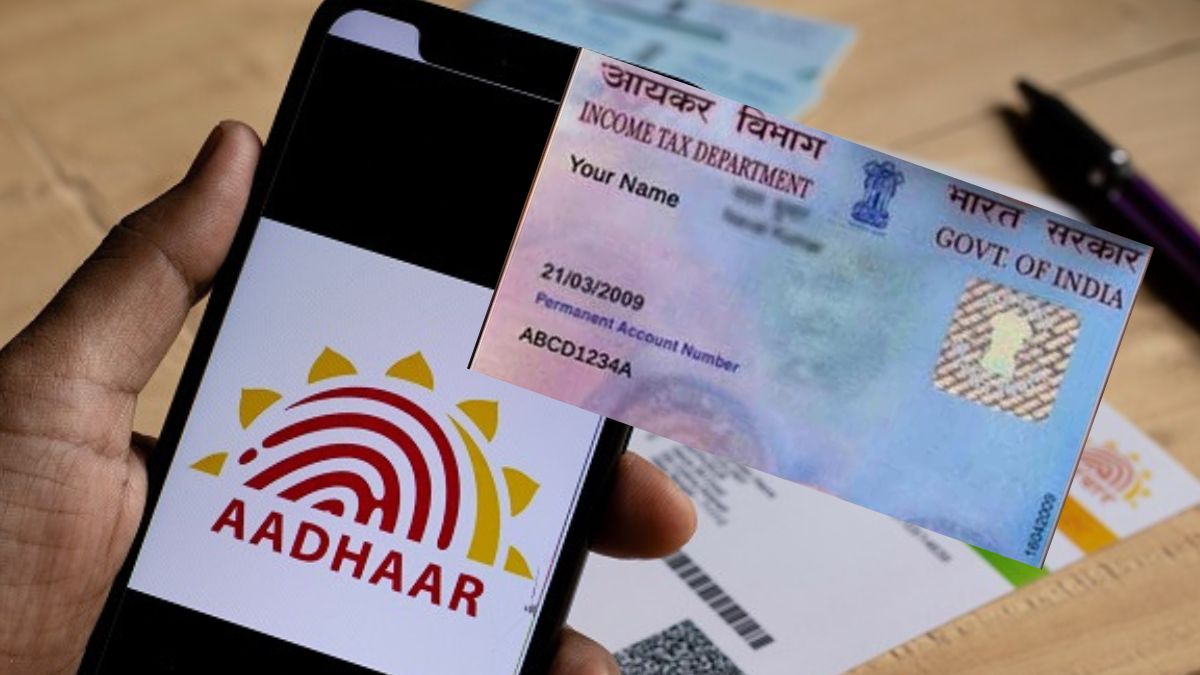
Losing crucial identity cards like your Aadhar Card, PAN Card, Driving License, or other documents can be a daunting experience. It’s essential to take immediate steps to safeguard your identity and prevent potential misuse. This comprehensive guide offers detailed information on what to do and the legal procedures involved: 1. File a Police Report: – Step 1: Visit your local police station as soon as you realize your cards are lost. – Step 2: File a First Information Report (FIR), which is a legal requirement. This establishes an official record of the loss, helping prevent identity fraud or financial fraud. – Step 3: Request a copy of the FIR for your records. 2. Lodge a Complaint with UIDAI (For Lost Aadhar Card): – Step 1: Visit the official UIDAI website. – Step 2: Select the “Retrieve Lost or Forgotten EID/UID” option. – Step 3: Provide the necessary information, such as your Aadhar number or Enrollment ID (EID). – Step 4: You will receive an OTP on your registered mobile number. – Step 5: Use the OTP to verify your identity and request a duplicate Aadhar card. This ensures the protection of your identity and guards against data fraud. – Step 6: Your Aadhar number remains the same; you’ll receive a new card. 3. Apply for a Duplicate PAN Card: – Step 1: Visit the official website of the Income Tax Department. – Step 2: Download and fill out Form 49A (Application for Allotment of Permanent Account Number). – Step 3: Submit the form along with the required documents to the nearest UTI or NSDL center. – Step 4: Pay the applicable fee to apply for a duplicate PAN card. This step secures your financial identity and helps prevent financial fraud. – Step 5: You’ll receive a new PAN card with the same PAN number. 4. Notify Your Bank and Financial Institutions: – Step 1: Contact your bank and other financial institutions where you’ve linked your Aadhar and PAN cards. – Step 2: Follow their guidance to update your information, securing your accounts and reducing the risk of financial fraud. 5. Replace Other Lost Cards: – Step 1: If you’ve lost additional identification cards, such as your driver’s license, voter ID, or passport, contact the respective issuing authorities. – Step 2: Follow their specific procedures to obtain duplicate cards and regain control over your identity. This step is essential in guarding against identity fraud. 6. Monitor for Identity Theft: – Step 1: Regularly monitor your financial accounts and credit reports for any suspicious activities. – Step 2: If you notice unauthorized transactions or accounts, report them immediately to the relevant authorities. Early detection is crucial in preventing identity fraud. 7. Update Your New Cards with Institutions: – Step 1: After obtaining duplicate cards, ensure you update them with the institutions where your previous cards were linked. – Step 2: This proactive step prevents identity fraud through the misuse of outdated cards. Following this step-by-step process not only helps you replace lost documents but also guards against data fraud, identity fraud, and financial fraud. Protecting your identity is a comprehensive defense against these types of fraud, and these measures can help you stay secure in an increasingly digital world. In case of any confusion or concerns, consult with legal experts for guidance and support. Legal Procedures Involved: – Filing a police report (FIR) is a legal requirement, and it is essential to protect yourself in case of potential misuse of your lost cards. – Applying for duplicate Aadhar and PAN cards involves legal procedures, and you must provide accurate information. – Ensure you adhere to the guidelines provided by the respective authorities for replacing other lost cards, such as your driving license or passport. Taking immediate action and following these legal procedures guarantees that your new cards are legitimate, protecting your identity. If you encounter any confusion or concerns, consult legal experts for guidance and support.
- 1
- 2