

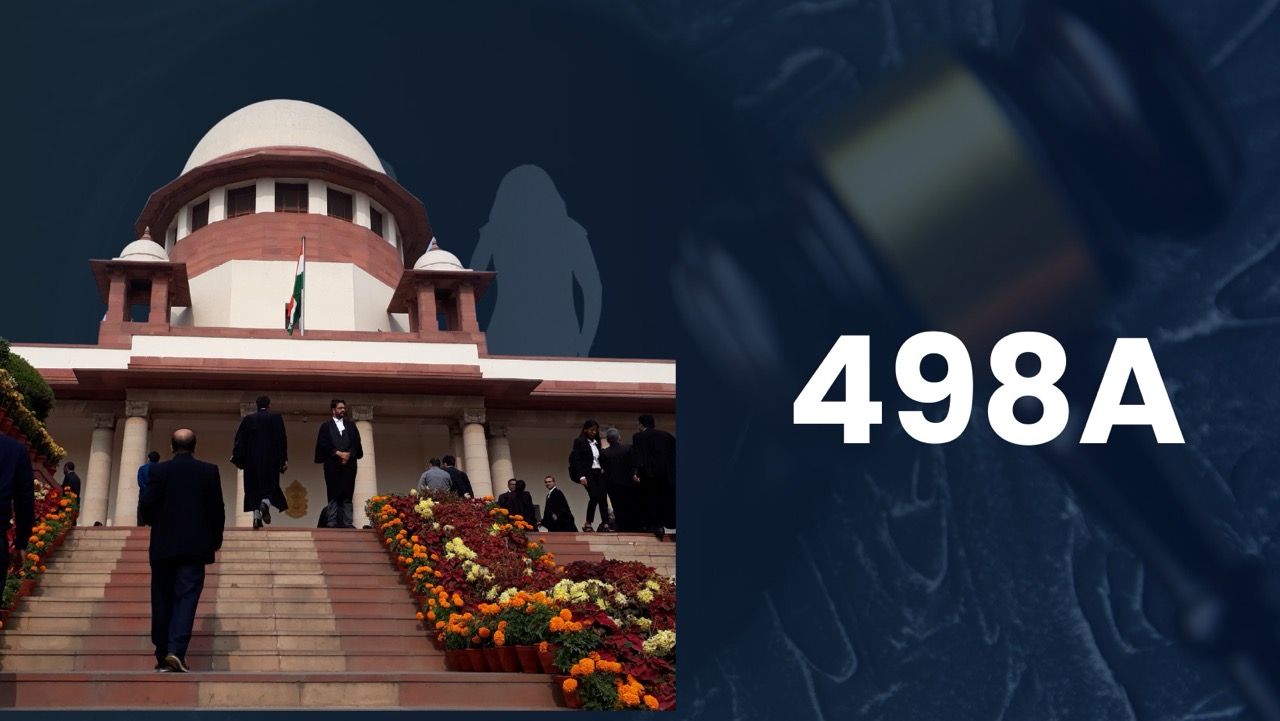
In a recent case titled “ACHIN GUPTA versus STATE OF HARYANA & ANR.”, the Supreme Court has raised significant concerns regarding the misuse of Section 498A of the Indian Penal Code (IPC) by wives against their husbands and in-laws. The Court, in its Criminal Appeal No. 2379 of 2024 arising out of SLP (Crl.) No. 4912 of 2022, urged the Parliament to introduce necessary amendments to the Bharatiya Nyaya Sanhita, 2023 (“BNS”), which includes provisions similar to Section 498A of IPC, such as Sections 85 and 86. The bench, comprising Justices JB Pardiwala and Manoj Misra, emphasized the need for legislative action, stating, “We request the Legislature to look into the issue as highlighted above taking into consideration the pragmatic realities and consider making necessary changes in Sections 85 and 86 respectively of the Bharatiya Nyaya Sanhita, 2023, before both the new provisions come into force.” Highlighting the similarity between the new provisions in BNS and Section 498A of IPC, the Court noted that while the text is nearly identical, the explanation to Section 498A of IPC is now a separate provision, i.e., Section 86 of the Bhartiya Nyaya Sanhita, 2023. This concern over the misuse of Section 498A is not new. In the case of Preeti Gupta v. State of Jharkhand (2010), the Court had previously expressed concerns about exaggerated complaints under Section 498A and urged legislative action to address these issues in light of practical realities and public opinion. Echoing the sentiments of the Preeti Gupta case, the judgment authored by Justice JB Pardiwala directed the Supreme Court registry to provide copies of the judgment to the Union Home Minister and Union Minister of Law & Justice for their attention. Background of the Case: The case originated from a divorce petition filed by the husband citing cruelty. In response, the wife filed an FIR against the husband under various sections of the IPC, including 498A. The High Court declined to quash the criminal case against the husband, citing the criteria outlined in the State of Haryana v. Bhajan Lal judgment, which allows quashing only in cases of manifestly malicious proceedings. Challenging the High Court’s decision, the husband appealed to the Supreme Court. Judgment: The Supreme Court observed that if criminal proceedings are initiated with the intention to harass the accused, the High Court should use its inherent powers under Section 482 of the Cr.P.C. to quash such proceedings. In this case, the Court concluded that continuing the criminal proceedings would amount to abuse of process and injustice. Therefore, the Court quashed the case against the accused/appellant. Furthermore, the Court directed that Section 498A IPC should not be applied mechanically in all complaints filed by wives. It emphasized that not all marital disputes amount to cruelty under the law. Conclusion: The Supreme Court’s stance underscores the need for balanced application of laws to prevent their misuse. The Court’s directives highlight the importance of considering practical realities and public opinion in legislative and judicial processes.

As the gavel falls on judgment day in a criminal trial, the accused find themselves at a pivotal moment. A nuanced understanding of the legal remedies available becomes paramount in navigating the complexities of India’s criminal justice system. – Plea Bargaining (Section 265-A, CrPC): Section 265-A allows accused individuals to opt for plea bargaining, admitting guilt in exchange for a lighter sentence. – Probation of Offenders Act (Section 4): First-time offenders can seek release on probation under the Probation of Offenders Act, Section 4. – Writ Petitions (Article 226, 32, Constitution of India): Accused can approach the High Court (Article 226) or Supreme Court (Article 32) through writ petitions like habeas corpus, mandamus, or certiorari if there is a violation of fundamental rights. – Application for Suspension of Sentence (Section 389, CrPC): Section 389 allows the accused to seek the suspension of the sentence pending appeal, enabling them to remain out of custody during the appeal process. – Fresh Trial: In extraordinary circumstances, a fresh trial may be sought based on grounds like the discovery of new evidence. Client-Centric Approach: Conclusion: Judgment day need not be the final chapter for the accused. Armed with a comprehensive understanding of legal provisions, avenues like bail, appeals, and constitutional remedies offer a lifeline. Navigating this legal terrain demands strategic thinking and legal acumen. As the wheels of justice turn, the accused can find solace in the fact that the journey doesn’t end with the pronouncement of judgment. #CriminalJustice #LegalRemedies #IndianLaw

In an era dominated by digital communication, safeguarding data privacy has become an imperative. This blog aims to provide a comprehensive exploration of data privacy laws in India, particularly focusing on the complexities surrounding call recordings. Delving into both legal nuances and practical implications, we’ll uncover the legal provisions, potential offences, and the associated penalties, while also shedding light on how individuals can be prosecuted and the safeguards available. Protection under the Act: The Act provides penalties for the breach of privacy and confidentiality. Initially, until 2008, this remedy was confined to individuals authorized under the Act who accessed electronic records without consent and disclosed such material. This limited scope did not address the protection of data in private transactions. Data Privacy Laws in India: 1. The Information Technology Act, 2000: It’s noteworthy that the penalty for unauthorized disclosure by private entities under Section 72A is greater than the penalty for similar actions by lawful authorities under Section 72. This legal framework aims to balance data protection while holding both private and authorized entities accountable for privacy breaches. 2. Indian Telegraph Act, 1885: – Section 5(2): Grants the government the power to intercept or disclose messages. 3. Right to Privacy: – Article 21 of the Constitution: Affirms the right to privacy as a fundamental right. Offences Related to Call Recordings: 1. Section 72A of the IT Act: – Offence: Unauthorized access to electronic records, books, correspondence, or other materials without the owner’s consent. – Prosecution: Offenders may face imprisonment up to three years, a fine up to five lakh rupees, or both. 2. Unauthorized Interception under Indian Telegraph Act: – Offence: Intercepting, disclosing, or using the contents of any telegraph message without the sender’s consent. – Prosecution: Offenders may face imprisonment up to three years, a fine, or both. 3. Breach of Contract under IT Act: – Offence: Disclosure of information in violation of a lawful contract. – Prosecution: Legal remedies may include damages awarded through civil suits for breach of contract. Prosecution and Penalties: 1. Section 72A of the IT Act: – Prosecution: Imprisonment up to three years, a fine up to five lakh rupees, or both. 2. Unauthorized Interception under Indian Telegraph Act: – Prosecution: Imprisonment up to three years, a fine, or both. 3. Breach of Contract under IT Act: – Prosecution: Legal remedies may include damages awarded through civil suits for breach of contract. How to Avoid Prosecution: 1. Obtain Explicit Consent: – Ensure explicit consent from all parties involved before initiating call recordings. 2. Implement Data Encryption: – Employ robust encryption methods to secure stored call recordings, mitigating unauthorized access risks. 3. Contractual Clarity: – Clearly articulate the terms of call recording in contractual agreements, ensuring alignment with legal requirements. Conclusion: As technology advances, understanding the intricate legal landscape of call recordings is imperative to navigate potential pitfalls. Strict adherence to data privacy regulations, coupled with obtaining explicit consent and deploying secure technologies, becomes pivotal. In a world increasingly reliant on digital communication, prioritizing privacy and ethical practices is not just good business sense but a legal necessity. Stay informed, stay compliant, and safeguard the privacy rights of all parties involved in the digital exchange of information. Your success is our priority! 🚀 Ready to fortify your corporate journey? Contact us today. 🤝 Addressing such a situation requires a multi-faceted legal approach, combining criminal and corporate law remedies. Engaging legal experts is paramount to navigating these complex challenges and ensuring justice and restitution.

In the scenario where two management-level employees commit fraud, including forgery and unauthorized actions leading to the removal of original directors, swift legal remedies are crucial. Here’s a comprehensive guide on the available remedies under IPC (Indian Penal Code) and corporate laws: Immediate Actions: 1. Lodge a Police Complaint: – IPC Offenses: File an FIR under relevant sections of the Indian Penal Code such as forgery (Section 463), criminal conspiracy (Section 120B), and fraud (Section 420). – Evidence: Provide documented evidence of forged documents, unauthorized actions, and fraudulent behavior. 2. Approach the Company Law Board (CLB): – Petition for Mismanagement: File a petition with the National Company Law Tribunal (NCLT), seeking relief against mismanagement under Section 397 and 398 of the Companies Act, 2013. – Interim Relief: Request interim relief to restore the original directors, pending the resolution of the case. 3. Freezing Bank Accounts: – Court Order: Seek a court order to freeze the company’s bank accounts to prevent further financial irregularities. – Preventing Asset Disposal: Request an injunction to prevent disposal of company assets. Legal Proceedings: 4. Reinstatement of Directors: – NCLT Proceedings: Initiate proceedings before the NCLT to challenge the fraudulent actions and seek reinstatement of the original directors. – Director’s Fiduciary Duties: Emphasize the breach of fiduciary duties by the management-level employees. 5. Special Resolution and Shareholder Meeting: – Convene a General Body Meeting (EGM): Call for an Extraordinary General Meeting to present the case before shareholders and seek their support. – Special Resolution: Pass a special resolution to nullify any unauthorized decisions taken during the fraudulent period. Corporate Governance Measures: 6. Internal Investigation: – Conduct Internal Inquiry: Initiate an internal investigation to gather evidence and document the extent of the fraud. – Employee Disciplinary Action: Take necessary disciplinary actions against involved employees, adhering to employment contracts and company policies. 7. Civil Suit for Damages: – File a Civil Suit: Pursue a civil suit against the fraudulent employees for damages caused to the company. – Compensation: Seek compensation for financial losses and damage to the company’s reputation. Preventive Measures: 8. Review and Strengthen Internal Controls: – Implement Strict Protocols: Strengthen internal controls to prevent unauthorized access to critical documents and decision-making processes. – Regular Audits: Conduct regular audits to identify and rectify potential loopholes in corporate governance. 9. Legal Consultation: – Seek Legal Counsel: Engage legal professionals specializing in corporate law and white-collar crime to guide you through the legal proceedings. – Advisory on Preventive Measures: Receive legal advice on implementing preventive measures to safeguard the company’s interests. Your success is our priority! 🚀 Ready to fortify your corporate journey? Contact us today. 🤝 Addressing such a situation requires a multi-faceted legal approach, combining criminal and corporate law remedies. Engaging legal experts is paramount to navigating these complex challenges and ensuring justice and restitution.

Introduction: Arrests, as potent tools in law enforcement, demand a delicate balance between justice and the protection of individual rights. Human Rights Commissions play a pivotal role in establishing guidelines that align with the legal framework, ensuring the dignity and rights of individuals are upheld during arrest procedures. In this comprehensive exploration, we’ll delve into the essential guidelines provided by Human Rights Commissions, closely intertwined with the relevant sections of the Indian Penal Code (IPC), Criminal Procedure Code (CrPC), and the Indian Evidence Act. 1. Presumption of Innocence: Human Rights Commissions, in consonance with Section 114 of the Indian Evidence Act, underscore the presumption of innocence until proven guilty. Arrests should be viewed as procedural steps rather than a declaration of guilt. 2. Legal Grounds for Arrest: As mandated by Section 41 of the CrPC, authorities must have clear legal grounds for making an arrest. Section 41A further emphasizes the need for a clear warrant or proper justification for arrest, preventing arbitrary detentions. 3. Notification of Arrest: Section 50 of the CrPC aligns with Human Rights Commissions’ emphasis on promptly informing the arrested person and their family of the grounds for arrest and the charges filed against them, ensuring transparency. 4. Right to Legal Representation: Enshrined in Article 22 of the Indian Constitution and supported by Section 303 of the CrPC, the right to legal representation is fundamental. Human Rights Commissions stress the importance of legal counsel during arrests to safeguard against coercion. 5. Avoiding Excessive Force: Section 46 of the CrPC explicitly prohibits the use of excessive force during arrests. This aligns with Human Rights Commissions’ stance on the prohibition of torture or cruel, inhuman, or degrading treatment. 6. Medical Examination: Sections 53 and 54 of the CrPC advocate for a mandatory medical examination after arrest. This mirrors the Human Rights Commissions’ recommendation, ensuring proper documentation and the well-being of the arrested individual. 7. Record Keeping: Section 41B of the CrPC mandates accurate and detailed records of the arrest process. This aligns with Human Rights Commissions’ emphasis on maintaining transparency through meticulous documentation. 8. Prompt Judicial Review: Section 167 of the CrPC aligns with Human Rights Commissions’ emphasis on the right to prompt judicial review. This prevents prolonged detention without legal scrutiny and underscores the principle of swift justice. 9. Protection of Vulnerable Groups: Sections 10 and 12 of the Juvenile Justice (Care and Protection of Children) Act, 2015, and Section 41D of the CrPC outline special care for arresting minors. This complements Human Rights Commissions’ stress on sensitivity toward vulnerable groups during arrests. 10. Post-Release Support: While not explicitly outlined in the legal framework, Human Rights Commissions advocate for post-release support as a part of the broader human rights perspective. This includes rehabilitation services, shielding against reprisals, and aligns with the overarching goal of ensuring holistic justice. Conclusion: Human Rights Commissions’ guidelines seamlessly intertwine with the legal fabric of India, encompassing the IPC, CrPC, and Evidence Act. This harmonious integration ensures that the power of arrest is wielded responsibly and legally, adhering to the principles of justice and human rights. As our legal landscape evolves, these guidelines continue to adapt, reflecting a steadfast commitment to upholding individual dignity and rights in the pursuit of justice.
You’re likely familiar with the Right to Information Act, commonly known as RTI—a potent tool for the public post-independence. The RTI Act of 2005 stands as a revolutionary law, aimed at fostering transparency within India’s governmental organizations. Before this act, only Members of Parliament held the exclusive right to access government information. With its implementation, the common person gained the ability to seek information from the government, making the RTI Act a valuable tool for anyone, be it a business owner or a concerned citizen. Understanding the Basics of RTI The RTI Act, with its extensive scope, covers a myriad of governance-related issues across all tiers of government—central, state, and local. It also extends to entities receiving substantial government funding. This guide aims to demystify the process of filing an RTI application, ensuring you can harness the power of information for your specific needs. How to File an RTI Application 1. Identify the Public Authority: – Determine the department or office from which you want information. 2. Draft Your Application: – Draft the RTI application form in English, Hindi, or the official language of the state. – Address it to the Public Information Officer (PIO), articulating your inquiries clearly. – Include your complete name, contact information, and the preferred address for receiving the RTI information/response. 3. No Prescribed Format: – There is no prescribed format for the application, and it can be submitted on plain paper. – No need to provide reasons for seeking information. Steps for RTI Application Online The Department of Personnel and Training has introduced the RTI online web portal, www.rtionline.gov.in, offering a convenient means for Indian citizens to submit their RTI applications and appeals electronically. The prescribed RTI fee can be conveniently paid online through this portal, streamlining the entire process. Fee and Modes of Payment Citizens seeking information are required to submit a demand draft, banker’s check, or Indian Postal Order of Rs. 10/- along with the application. Payment can also be made in cash directly to the Public Authority or Assistant Public Information Officer, with a proper receipt issued. For Central Ministries/Departments, online payment options are available through State Bank of India Internet Banking or via Master/Visa Debit/Credit Card. Note: Citizens below the poverty line are exempt from paying the RTI fee, provided they enclose a copy of the relevant government-issued certificate as proof. Period for Information Supply The public authority aims to furnish the requested information within 30 days of receiving the application. However, if the information pertains to the life or liberty of an individual, it must be provided within a shorter timeframe of 48 hours. Government Offices Covered Under the RTI Act The RTI Act encompasses all government agencies, whether operating under the state or central government. This includes entities such as Municipal Corporations, PSUs, Government Departments, Ministries, the Judiciary, Government-Owned Companies, Universities, Schools, Construction Departments, Road Authorities, Provident Fund Department, and more. Government Organizations Not Covered Under the RTI Act Entities associated with defense and intelligence, such as RAW, BSF, CRPF, CISF, Intelligence Bureau, National Security Guard, etc., are subject to the provisions of the RTI Act, with specific exemptions to protect sensitive information. Summary: Empowering Citizens through Information The Right to Information (RTI) is a highly effective and cost-efficient tool, allowing individuals to scrutinize the allocation of public funds, identify corruption, and assess the working status of government officials. It serves as a means to subject government institutions to scrutiny, contributing to the principles of accountability and openness in governance. Empowered with the knowledge of RTI, an ordinary citizen has the authority to request information from any government agency, thereby enhancing transparency in operations.

A leave and licence agreement is a legal document that establishes a temporary arrangement between a landlord (licensor) and a tenant (licensee). This agreement is commonly used in the rental housing segment. Here are some key points and explanations related to leave and licence agreements: 1. Purpose and Nature: 2. Differences from Lease: 3. Legal Basis: 4. Revocability and Determination: 5. Online Agreements: 6. Agreement Format: 7. Duration: 8. Court Decision: 9. FAQs: In summary, a leave and licence agreement is a flexible legal tool that allows property owners to grant temporary rights to occupants without creating long-term property interests. The agreement’s terms are crucial in defining the relationship between the licensor and licensee.

According to Indian Law, IPC Section 498A states, “Husband or a relative of the husband subjecting a woman to cruelty shall be subject to imprisonment for a term of three years and shall also be liable to a fine.” In today’s context, Section 498A IPC is often used by women in India to file complaints against their husbands for various forms of cruelty, whether physical, mental, or psychological. The punishment for a Section 498A case is well-known, as numerous cases have come to the forefront. Over the past seven decades, India has witnessed the creation and amendment of many women protection laws aimed at safeguarding the rights of Indian women. However, recent years have seen activists questioning these laws’ biases, advocating for harassed women to consider divorce proceedings. This misuse of Section 498 IPC has increased in recent times, mainly because there isn’t a clearly defined and straightforward mutual divorce process in place. Consequently, Section 498A often becomes the preferred choice for settling personal scores, leading to a clear disparity in the legal system, where the abuse suffered by men is not given equal recognition or protection. How can one protect themselves against a Section 498A IPC case’s potential misuse? Indian laws do have some remedies to address this concern: 1. Collect All Evidence & Documents: Gathering substantial evidence is the first step in refuting a false accusation. This can include preserving any communication between you, your family, your wife, or her relatives, such as SMS, emails, letters, and call recordings. 2. Get an Anticipatory Bail: If you anticipate a Section 498A complaint, hire a criminal defense lawyer to seek an anticipatory bail to prevent arrests. Anticipatory bail is a precautionary measure to avoid potential arrests and is filed under Section 438 of CrPC. 3. Get the 498A FIR Quashed: It’s possible to get a false 498A FIR quashed by the High Court under Section 482 of CrPC if you have substantial proof. 4. File an FIR Against Your Wife: In case your wife threatens to file a false 498A case, you can also file an FIR against her for blackmail or making a false complaint. 5. File a Case for Restitution of Conjugal Rights (RCR): If your wife has left your matrimonial home, you can file an RCR case against her under Section 9 of the Hindu Marriage Act, specifying the terms and conditions for her return. 6. File a Defamation Case: If your wife maligns your image by filing a false 498A case, you can file a defamation case against her. The duration of a 498A case primarily depends on the evidence presented and how effectively your lawyer represents your case in court. The frequent misuse of Section 498A has prompted the Supreme Court to implement new guidelines to prevent such misuse: 1. Family Welfare Committees must be established in every district by District Legal Services Authorities to handle Section 498A cases. 2. All 498A complaints received by the police or magistrate must be sent to this committee, which should submit a report within 30 days. 3. No arrest should be made until a report from the committee is received. 4. If an anticipatory bail for 498A is filed, it must be decided within a day. 5. Personal appearances may not be required in court, and video conferencing should be allowed for outstation family members. While Section 498A serves to protect women against cruelty and dowry-related issues, it’s essential to be aware of your legal rights and how to use them in the event of a false accusation. Securing Your Rights While the law is intended to protect women from harassment and dowry-related issues, individuals facing false accusations under Section 498A IPC have several legal provisions to consider. Here are some sections that may help you in case you need to file a counter case against your wife: These legal provisions empower individuals to defend their rights and reputation when faced with false accusations or threats. It’s essential to understand your legal options and use them judiciously. For further assistance and guidance, feel free to reach out to us at ProLegalMinds via email at hello@prolegalminds.com or by phone at +91-7799518123. We’re committed to providing the best legal support and ensuring your rights are protected. 💪 #LegalRights #Section498A #LegalRemedies #ProLegalMinds #LegalProtection #LegalAdvice #LegalSupport #IndianLaw #LegalSystem #ProtectYourRights Ready to take action? Click the link below to schedule your appointment now. Speak to us on +91-7799518123. Your path to legal protection starts here: [Schedule Your Appointment]( https://meetings.hubspot.com/shiva20 )

Introduction: Inheritance and succession planning are crucial yet complex aspects of estate management for Hindus in India. Hindu succession laws have undergone major changes in recent years, granting daughters equal rights in ancestral property. This extensive guide covers all key topics related to Hindu property inheritance in a detailed manner. Types of Property: Hindu property can be broadly classified into two categories: 1. Ancestral/Coparcenary Property – This consists of property inherited up to 4 generations of male lineage. – Earlier only sons had a birthright and share in such property. – After the Hindu Succession Act amendments in 2005, daughters also have equal coparcenary rights by birth in ancestral property. 2. Self-Acquired Property – This is any property acquired by an individual during their lifetime through purchase, mortgage, gift, inheritance from maternal ancestors, etc. – For such property, sons and daughters stand on equal footing. Succession Rules for Coparcenary Property: Earlier, coparcenary property used to pass to heirs only through the male line of succession based on the rule of survivorship. The succession order was as follows: – Sons – Grandsons through sons – Great grandsons through grandsons If a man died leaving no male heirs, the property could go to remote male agnates like nephews, uncles etc. Women had no rights. After 2005 Amendment: – Sons and daughters both have equal coparcenary rights by birth in ancestral property. – Daughters can also become kartas or managers of a Hindu Undivided Family (HUF) property. – If a coparcener dies leaving no heirs, the property will pass to his/her legal heirs as per succession charts. Important Sections: Sections 6, 8, 15(1)(a), 15(2)(a) of the Hindu Succession Act 1956 deal with coparcenary rights and succession. Succession Rules for Self-Acquired Property: For self-acquired property of a Hindu male or female, the succession occurs in the following preferential order: 1. Children/descendents 2. Mother and Father 3. Husband or Wife 4. Heirs of husband or wife 5. Heirs of father 6. Heirs of mother Relevant Sections: Sections 15(1)(b), 15(1)(d), 15(2), 16 of the Hindu Succession Act 1956 cover these rules. Making a Will: – A Hindu can make a testamentary will to divide self-acquired property according to their own wishes and override the default succession order. – The will must adhere to legal requirements like witness attestation. – Certain heirs like children and dependents have rights over a portion of assets despite any will. Protection of Elderly Parents: – The Maintenance and Welfare of Parents and Senior Citizens Act 2007 provides measures for financial protection of elderly. – Children or heirs are obligated to provide monthly maintenance to parents and senior citizens. – Tribunals can order compensation for neglected parents/senior citizens. Registration of Documents: – It is advisable to properly register all deeds of family settlement, partition, release of coparcenary rights etc. – Unregistered documents have limited validity and can complicate inheritance. The Hindu Succession Act, 1956 (HSA) governs the succession of property among Hindus in India. The Act applies to all Hindus, including Jains, Buddhists, and Sikhs. It also applies to Hindus who have converted to another religion. How to split property among siblings The HSA provides for equal distribution of property among siblings of both genders. This means that if a Hindu dies without leaving a will (intestate), their property will be divided equally among their sons, daughters, and any children of their deceased sons or daughters. How to handle inherited and self-acquired property The HSA does not distinguish between inherited and self-acquired property. All property of a Hindu, whether inherited or self-acquired, is subject to the same rules of succession. Indian laws governing Hindu succession The HSA is the primary law governing Hindu succession in India. However, there are a few other laws that also apply to certain aspects of Hindu succession. For example, the Hindu Marriage Act, 1955 and the Special Marriage Act, 1954 contain provisions relating to the succession of property of married Hindu women. Detailed act and sections related to Hindu succession The HSA contains a detailed list of the heirs to the property of a Hindu who dies intestate. The heirs are divided into two classes: If there are no heirs in Class I, the property will go to the heirs in Class II. If there are no heirs in either class, the property will devolve to the State. Procedure linked to enable smooth succession To enable smooth succession, it is important to create a will. A will is a legal document that states how a person wants their property to be distributed after their death. If a Hindu dies without leaving a will, their property will be distributed according to the HSA, which may not be in accordance with their wishes. Risks and other considerations There are a few risks and considerations that should be kept in mind when dealing with Hindu succession of property. One risk is that there may be disputes among the heirs over the distribution of the property. Another risk is that the property may be lost or wasted if it is not properly managed. To mitigate these risks, it is important to have a clear understanding of the HSA and to seek legal advice if necessary. It is also important to have a proper succession plan in place. This may involve creating a will, setting up trusts, and appointing guardians for minor children. When to invoke intestate will An intestate will is invoked when a person dies without leaving a will. In this case, the person’s property will be distributed according to the HSA. How should property be divided among children The HSA provides for equal distribution of property among children of both genders. This means that if a Hindu dies intestate, their property will be divided equally among their sons, daughters, and any children of their deceased sons or daughters. Which sections of law support it Section 6 of the HSA provides for the devolution of interest in coparcenary property. Coparcenary property is property that is jointly owned by a

How Indian Civil and Contract Law Protect Against Sale Agreement Violations Introduction: Property transactions in India are intricate processes that demand a thorough understanding of legal safeguards and contractual obligations. Whether you’re a buyer or a seller, protecting your interests in a property sale agreement is paramount. In this comprehensive guide, we will explore the multifaceted aspects of safeguarding property transactions and how Indian civil and contract law serve as vital guardians against potential sale agreement violations. We’ll delve into legal provisions, case studies, and practical advice to ensure a smooth, ethical, and legally sound property transaction. 1: Legal Framework for Property Sale Agreements – Understanding the Indian civil and contract law provisions that govern property sale agreements. – Essential terms and conditions in a property sale agreement. – The significance of a comprehensive and legally sound agreement. 2: Remedies for Breach of Property Sale Agreements – Exploring legal remedies available to aggrieved parties in case of agreement violations. – Specific performance, compensation, and agreement termination as possible remedies. – The circumstances under which each remedy is applicable. 3: Learning from Real-Life Cases – Examining real-life case studies to gain insights into the practical application of Indian civil and contract law. – Understanding how courts interpret legal provisions in property transactions. – Navigating disputes effectively by learning from past cases. 4: Due Diligence in Property Transactions – The importance of due diligence in property transactions. – Conducting a thorough investigation of property titles, ownership, and legal standing. – Ensuring that the property’s legal status is clear and free from encumbrances. 5: The Role of Legal Assistance – The benefits of seeking legal advice and assistance in property transactions. – How to choose a qualified lawyer who specializes in property law. – Understanding your rights and obligations with legal guidance. 6: Ethical Conduct and Transparency – The significance of transparency and ethical conduct in property transactions. – Adhering to principles of fairness, honesty, and good faith. – Maintaining clear and open communication to prevent disputes. 7: Drafting a Solid Property Sale Agreement – Practical tips for drafting a comprehensive and legally sound property sale agreement. – Including all essential terms and conditions to protect the interests of both parties. – Common pitfalls to avoid in the drafting process. 8: Property Registration and Transfer – The process of registering the property and ensuring a legal transfer. – The role of stamp duty and registration fees. – Compliance with the legal formalities to safeguard the transaction. 9: Property Disputes and Resolution – Strategies for resolving property disputes amicably and legally. – Mediation, arbitration, and litigation as dispute resolution mechanisms. – The importance of seeking legal guidance in dispute resolution. 10: Ongoing Responsibilities After the Sale – Post-sale obligations and responsibilities of both buyers and sellers. – Ensuring a smooth transition of property possession and ownership. – Complying with legal requirements for a successful property transaction. Conclusion: Ensuring a Secure and Ethical Property Transaction – Summarizing the key takeaways and strategies for safeguarding property transactions. – Emphasizing the importance of understanding legal safeguards and obligations. – A call to maintain ethical conduct and transparency for a secure and ethical property transaction. Key legal acts, sections, and provisions related to safeguarding property transactions in India. 1: Legal Framework for Property Sale Agreements 1.1. The Indian Contract Act, 1872: – Section 10 of the Indian Contract Act, 1872, defines the essentials of a valid contract, including the free consent of the parties involved. – Section 23 of the act outlines the consideration for an agreement, which is crucial in property sale agreements. 1.2. The Transfer of Property Act, 1882: – Section 54 of the Transfer of Property Act defines the term ‘sale’ and sets out the essentials for a valid sale. – Section 55 details the rights and liabilities of the seller and buyer. – Sections 58 and 59 specify the rights and responsibilities during the performance of the contract and the rules for creating a valid sale deed. 2: Remedies for Breach of Property Sale Agreements 2.1. Specific Relief Act, 1963: – The Specific Relief Act provides for specific performance as a remedy for breach of a property sale agreement, ensuring that the defaulting party fulfills its contractual obligations. – Sections 10 and 14 of the act outline the principles governing specific performance. 2.2. The Indian Contract Act, 1872: – Section 73 of the Indian Contract Act provides for compensation for loss or damage caused by the breach of contract, which can be applicable in property transactions. 4: Due Diligence in Property Transactions 4.1. Registration Act, 1908: – The Registration Act governs the registration of property documents. Section 17 of the act outlines the documents that must be registered, including sale deeds. – Section 18 prescribes the place of registration, and Section 49 deals with the effect of non-registration. 4.2. The Real Estate (Regulation and Development) Act, 2016: – This act applies to the real estate sector and aims to protect the interests of property buyers. It requires builders and developers to register their projects and provide accurate information to buyers. 7: Drafting a Solid Property Sale Agreement 7.1. The Indian Easements Act, 1882: – The Easements Act governs rights and liabilities arising from the grant or acquisition of easements. Understanding this act is essential when dealing with properties where easements may affect the rights of the buyer. 7.2. Indian Stamp Act, 1899: – The Indian Stamp Act prescribes the stamp duty applicable to property transactions. Section 29 of the act lists the instruments that are chargeable with duty. 9: Property Disputes and Resolution 9.1. The Arbitration and Conciliation Act, 1996: – The Arbitration and Conciliation Act provides for alternative dispute resolution methods, including arbitration, which can be used to resolve property disputes without going to court. 10: Ongoing Responsibilities After the Sale 10.1. Registration Act, 1908 (Section 30): – Section 30 of the Registration Act deals with the consequences of non-registration, emphasizing the importance of post-sale registration and compliance. By understanding these acts, sections, and provisions, individuals involved in property transactions can better safeguard